14 Jul 2026
Interface Choices in Blockchain Casino Apps and Their Connection to Live Dealer Incentive Claim Rates
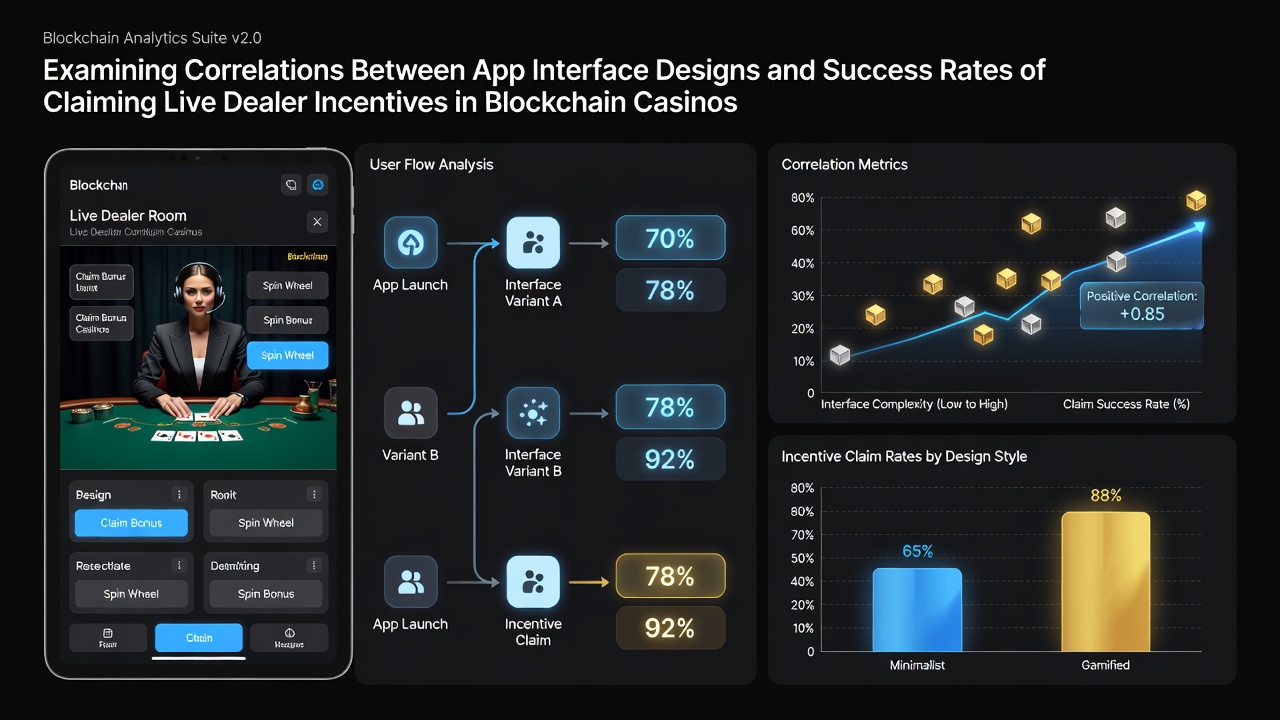
App designers in the blockchain casino sector have spent years refining layouts that help users locate and activate live dealer incentives, and studies from 2025 through mid-2026 track how those layout decisions align with actual claim completion numbers. Researchers tracking user flows across dozens of platforms note that navigation depth, button placement, and visual hierarchy produce measurable differences in how often players finish the incentive redemption sequence.
Core Design Elements Under Review
Clear menu structures that place the live dealer lobby within two taps of the home screen correlate with higher claim rates in multiple platform audits, while buried incentive sections behind multiple confirmation screens show lower completion figures. Color contrast on claim buttons, font sizing for terms, and progress indicators all factor into the patterns that analysts compile each quarter.
Wallet connection prompts integrated directly into the incentive flow reduce steps between selection and activation, and platforms that embed these prompts report steadier success numbers compared with those that route users to separate wallet screens. Observers tracking July 2026 data releases see consistent gaps between apps that streamline this path and those that maintain separate flows.
Live Dealer Incentives in Blockchain Environments
Blockchain casinos structure live dealer incentives around deposit matches, cashback on table play, and time-limited session rewards that settle through smart contracts. These offers differ from traditional bonuses because verification happens on-chain, which adds an extra layer of confirmation screens that interfaces must accommodate without creating friction.
Players often encounter prompts for wallet signatures right after clicking a live dealer incentive banner, and the timing of these prompts influences whether the claim process reaches completion. Data from platform analytics show that signature requests placed after basic eligibility checks produce fewer drop-offs than those that appear at the very start of the flow.
Patterns Emerging From Usage Data
Analytics teams compiling cross-platform metrics find that apps using persistent bottom navigation bars maintain higher retention through the claim sequence than those relying solely on hamburger menus. Scroll depth before reaching the incentive details also tracks with completion rates, as users who encounter the offer within the first screen scroll show stronger follow-through.

One research group examining European and North American platforms during the first half of 2026 documented that interfaces displaying remaining claim time in real time alongside the redemption button saw improved finish rates. The same group noted that apps incorporating simple progress bars for multi-step claims reduced abandonment compared with versions that presented all requirements on a single dense screen.
Regional Regulatory Context and Reporting
Authorities such as the Alcohol and Gaming Commission of Ontario collect operational data that includes user interface performance metrics for licensed operators, and similar reporting frameworks in other jurisdictions supply comparable figures. Industry reports from trade associations add further detail on how design adjustments affect incentive uptake across blockchain-focused platforms.
Academic papers examining user behavior in digital gaming environments further support these observations, with one 2025 study from a Canadian research institution highlighting how micro-interactions in claim flows influence completion percentages. Those findings align with operational data shared by platform operators who track on-chain settlement success alongside interface events.
Additional Variables That Interact With Design
Device type plays a role, as interfaces optimized for smaller screens maintain better claim continuity on mobile than on tablet layouts that stretch elements across wider displays. Network latency during wallet confirmations also intersects with interface design, because apps that preload signature data before users reach the final step experience fewer interruptions.
Seasonal promotions tied to live dealer tournaments introduce temporary interface changes, and platforms that revert to standard layouts quickly after events end preserve baseline claim rates more effectively than those that leave modified screens in place. Tracking these temporary shifts supplies another data point for correlation studies.
Conclusion
Platform operators continue to test variations in button placement, confirmation timing, and visual cues while monitoring on-chain settlement records. The resulting datasets allow researchers to map specific interface decisions against claim success percentages, and ongoing analysis through 2026 refines understanding of which combinations produce the strongest alignment between design choices and redemption outcomes.