11 Jun 2026
The Convergence of Blockchain Payments and Deposit-Free Bonuses in Live Mobile Dealer Gaming
 Crypto payments have expanded into mobile live dealer environments over recent years, while no-deposit incentives have become standard entry mechanisms on many platforms. These two elements now intersect in ways that affect transaction speeds, player verification processes, and reward structures across global markets. Data from industry tracking services indicates that blockchain-based transfers account for a growing share of deposits in live dealer titles, particularly on devices running iOS and Android operating systems. Live dealer games streamed to mobile screens require stable connections and quick settlement times, and cryptocurrencies such as Bitcoin, Ethereum, and several stablecoins meet those demands more directly than many traditional rails. No-deposit incentives, which grant players access to real-money tables or slot-style variants without an initial transfer, combine with crypto rails to reduce friction during the first interaction. Observers note that platforms often structure these offers so that bonus credits convert into playable balances once a wallet address receives a minimal confirmation. **Blockchain Settlement Mechanics in Mobile Settings**
Crypto networks process transactions through distributed ledgers that update in blocks, and mobile applications integrate wallet APIs that allow users to scan QR codes or paste addresses directly from the game lobby. This setup eliminates the multi-day holds common with certain card processors. Research from academic sources on distributed ledger adoption shows average confirmation times for stablecoin transfers falling below one minute on networks optimized for high throughput. Mobile live dealer studios, which operate continuous streams from physical tables in locations such as the Philippines and Eastern Europe, accept these transfers because the funds appear in operator accounts without intermediary banks. No-deposit bonuses attached to crypto accounts typically carry wagering requirements expressed as multiples of the credited amount, and platforms track these requirements through internal ledgers that update in real time. Players receive the incentive after registering an account and linking a compatible wallet, then they can join blackjack, roulette, or baccarat tables with the bonus balance. The intersection appears when operators credit winnings from bonus play back to the same crypto address used for verification, creating a closed loop that bypasses conventional banking delays. **Market Data and Regional Patterns Emerging in 2026**
Figures released in June 2026 by several analytics firms revealed that mobile live dealer traffic originating from crypto-funded accounts increased by double-digit percentages year over year in multiple jurisdictions outside the United Kingdom. These reports also recorded higher average session lengths when no-deposit offers were active, because players could test table limits and dealer styles without committing capital upfront. One study compiled by researchers at a North American university examined transaction logs from platforms operating under Malta and Gibraltar licenses and found that stablecoin usage correlated with lower abandonment rates during the onboarding sequence. Platforms have adjusted their compliance layers to accommodate both crypto and bonus mechanics. Know-your-customer checks occur after a player reaches a defined withdrawal threshold rather than at registration, and automated systems flag unusual wallet activity using on-chain analytics tools. Regulatory bodies in Canada and Australia have issued guidance documents that address the treatment of digital asset transfers and the disclosure of no-deposit terms, requiring clear statements about expiry periods and eligible game contributions.
Crypto payments have expanded into mobile live dealer environments over recent years, while no-deposit incentives have become standard entry mechanisms on many platforms. These two elements now intersect in ways that affect transaction speeds, player verification processes, and reward structures across global markets. Data from industry tracking services indicates that blockchain-based transfers account for a growing share of deposits in live dealer titles, particularly on devices running iOS and Android operating systems. Live dealer games streamed to mobile screens require stable connections and quick settlement times, and cryptocurrencies such as Bitcoin, Ethereum, and several stablecoins meet those demands more directly than many traditional rails. No-deposit incentives, which grant players access to real-money tables or slot-style variants without an initial transfer, combine with crypto rails to reduce friction during the first interaction. Observers note that platforms often structure these offers so that bonus credits convert into playable balances once a wallet address receives a minimal confirmation. **Blockchain Settlement Mechanics in Mobile Settings**
Crypto networks process transactions through distributed ledgers that update in blocks, and mobile applications integrate wallet APIs that allow users to scan QR codes or paste addresses directly from the game lobby. This setup eliminates the multi-day holds common with certain card processors. Research from academic sources on distributed ledger adoption shows average confirmation times for stablecoin transfers falling below one minute on networks optimized for high throughput. Mobile live dealer studios, which operate continuous streams from physical tables in locations such as the Philippines and Eastern Europe, accept these transfers because the funds appear in operator accounts without intermediary banks. No-deposit bonuses attached to crypto accounts typically carry wagering requirements expressed as multiples of the credited amount, and platforms track these requirements through internal ledgers that update in real time. Players receive the incentive after registering an account and linking a compatible wallet, then they can join blackjack, roulette, or baccarat tables with the bonus balance. The intersection appears when operators credit winnings from bonus play back to the same crypto address used for verification, creating a closed loop that bypasses conventional banking delays. **Market Data and Regional Patterns Emerging in 2026**
Figures released in June 2026 by several analytics firms revealed that mobile live dealer traffic originating from crypto-funded accounts increased by double-digit percentages year over year in multiple jurisdictions outside the United Kingdom. These reports also recorded higher average session lengths when no-deposit offers were active, because players could test table limits and dealer styles without committing capital upfront. One study compiled by researchers at a North American university examined transaction logs from platforms operating under Malta and Gibraltar licenses and found that stablecoin usage correlated with lower abandonment rates during the onboarding sequence. Platforms have adjusted their compliance layers to accommodate both crypto and bonus mechanics. Know-your-customer checks occur after a player reaches a defined withdrawal threshold rather than at registration, and automated systems flag unusual wallet activity using on-chain analytics tools. Regulatory bodies in Canada and Australia have issued guidance documents that address the treatment of digital asset transfers and the disclosure of no-deposit terms, requiring clear statements about expiry periods and eligible game contributions. 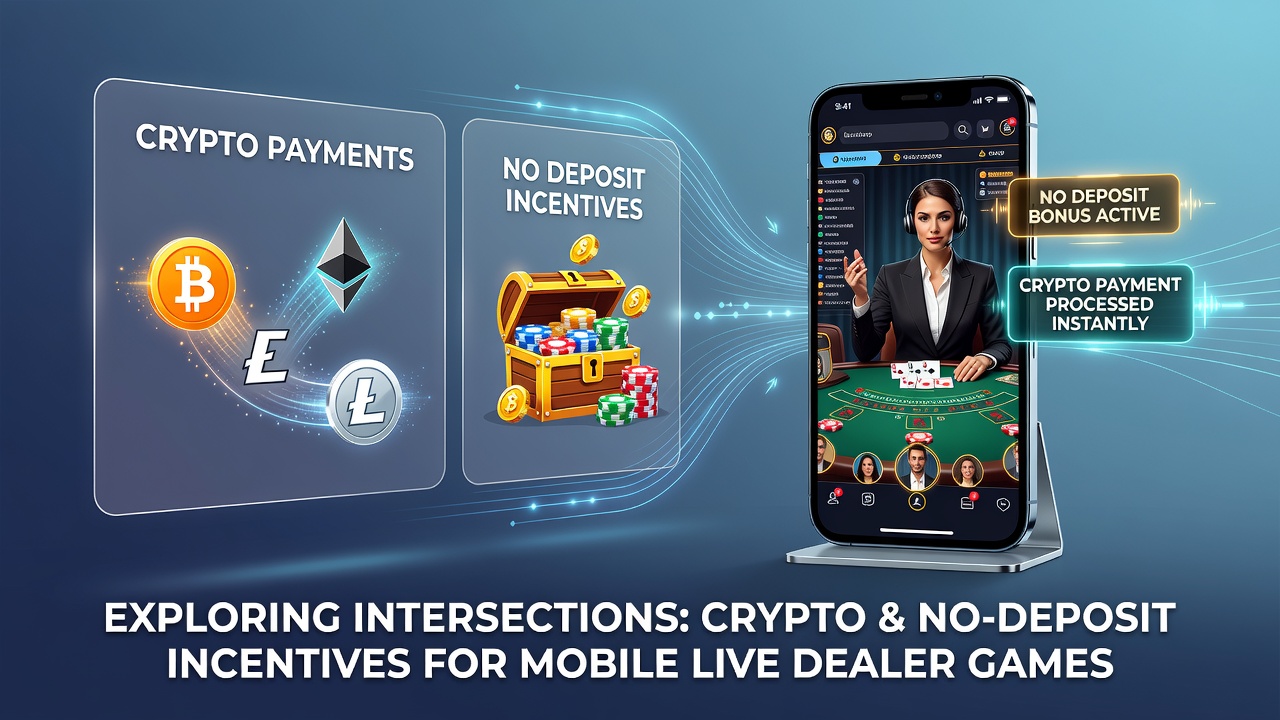 **Operational Integration and Player Verification Flows**
Operators integrate crypto payment gateways that communicate with mobile applications through secure APIs, allowing the game client to display real-time balance updates once a transaction receives network confirmation. No-deposit incentives function as separate ledgers within the same account, and the system automatically merges bonus funds with any subsequent crypto deposits once wagering conditions are satisfied. This architecture reduces the number of manual interventions required from support teams. Take one platform that launched a mobile-exclusive live dealer suite in early 2025. It offered a no-deposit credit of twenty-five units to new accounts verified through a crypto wallet address, and players could access roulette tables immediately after the address received a single confirmation. Data collected over subsequent months showed that a measurable portion of those accounts later funded with additional crypto transfers once the initial credit had been used. **Security Considerations and Network Choices**
Security protocols rely on multi-signature wallet configurations and encrypted key storage within mobile applications. Operators select networks that provide both speed and finality guarantees, and they publish supported coin lists within the cashier section so players can match their existing holdings. No-deposit bonuses remain isolated from withdrawal functions until identity verification documents are submitted, a step that occurs only when cumulative activity crosses regulatory thresholds. The American Gaming Association has published position papers on digital asset usage in gaming that outline best practices for transaction monitoring and responsible gaming controls. These documents emphasize transparent communication of bonus terms and the importance of accurate display of wagering progress within mobile interfaces. **Future Trajectories Based on Current Implementations**
Developers continue to refine mobile interfaces so that wallet connections occur inside the live dealer lobby rather than requiring users to exit to external applications. This reduces context switching and keeps players within the streamed table environment. Concurrently, platforms refine bonus engines to recognize crypto-specific deposit patterns when calculating contribution toward release of no-deposit winnings. Those who monitor industry filings observe that licensing applications submitted in 2026 increasingly reference blockchain infrastructure alongside traditional payment options. The combination of rapid settlement and zero-deposit entry points creates measurable differences in user acquisition metrics compared with earlier models that relied solely on card or e-wallet funding. **Conclusion**
Crypto payments and no-deposit incentives intersect at multiple points within mobile live dealer ecosystems, affecting transaction velocity, verification timing, and initial engagement patterns. Available data from regulatory filings and academic analyses document these shifts across several jurisdictions through mid-2026. Continued technical integration and evolving compliance frameworks will shape how these elements develop together in subsequent periods.
**Operational Integration and Player Verification Flows**
Operators integrate crypto payment gateways that communicate with mobile applications through secure APIs, allowing the game client to display real-time balance updates once a transaction receives network confirmation. No-deposit incentives function as separate ledgers within the same account, and the system automatically merges bonus funds with any subsequent crypto deposits once wagering conditions are satisfied. This architecture reduces the number of manual interventions required from support teams. Take one platform that launched a mobile-exclusive live dealer suite in early 2025. It offered a no-deposit credit of twenty-five units to new accounts verified through a crypto wallet address, and players could access roulette tables immediately after the address received a single confirmation. Data collected over subsequent months showed that a measurable portion of those accounts later funded with additional crypto transfers once the initial credit had been used. **Security Considerations and Network Choices**
Security protocols rely on multi-signature wallet configurations and encrypted key storage within mobile applications. Operators select networks that provide both speed and finality guarantees, and they publish supported coin lists within the cashier section so players can match their existing holdings. No-deposit bonuses remain isolated from withdrawal functions until identity verification documents are submitted, a step that occurs only when cumulative activity crosses regulatory thresholds. The American Gaming Association has published position papers on digital asset usage in gaming that outline best practices for transaction monitoring and responsible gaming controls. These documents emphasize transparent communication of bonus terms and the importance of accurate display of wagering progress within mobile interfaces. **Future Trajectories Based on Current Implementations**
Developers continue to refine mobile interfaces so that wallet connections occur inside the live dealer lobby rather than requiring users to exit to external applications. This reduces context switching and keeps players within the streamed table environment. Concurrently, platforms refine bonus engines to recognize crypto-specific deposit patterns when calculating contribution toward release of no-deposit winnings. Those who monitor industry filings observe that licensing applications submitted in 2026 increasingly reference blockchain infrastructure alongside traditional payment options. The combination of rapid settlement and zero-deposit entry points creates measurable differences in user acquisition metrics compared with earlier models that relied solely on card or e-wallet funding. **Conclusion**
Crypto payments and no-deposit incentives intersect at multiple points within mobile live dealer ecosystems, affecting transaction velocity, verification timing, and initial engagement patterns. Available data from regulatory filings and academic analyses document these shifts across several jurisdictions through mid-2026. Continued technical integration and evolving compliance frameworks will shape how these elements develop together in subsequent periods.
Crypto payments have expanded into mobile live dealer environments over recent years, while no-deposit incentives have become standard entry mechanisms on many platforms. These two elements now intersect in ways that affect transaction speeds, player verification processes, and reward structures across global markets. Data from industry tracking services indicates that blockchain-based transfers account for a growing share of deposits in live dealer titles, particularly on devices running iOS and Android operating systems. Live dealer games streamed to mobile screens require stable connections and quick settlement times, and cryptocurrencies such as Bitcoin, Ethereum, and several stablecoins meet those demands more directly than many traditional rails. No-deposit incentives, which grant players access to real-money tables or slot-style variants without an initial transfer, combine with crypto rails to reduce friction during the first interaction. Observers note that platforms often structure these offers so that bonus credits convert into playable balances once a wallet address receives a minimal confirmation. **Blockchain Settlement Mechanics in Mobile Settings**
Crypto networks process transactions through distributed ledgers that update in blocks, and mobile applications integrate wallet APIs that allow users to scan QR codes or paste addresses directly from the game lobby. This setup eliminates the multi-day holds common with certain card processors. Research from academic sources on distributed ledger adoption shows average confirmation times for stablecoin transfers falling below one minute on networks optimized for high throughput. Mobile live dealer studios, which operate continuous streams from physical tables in locations such as the Philippines and Eastern Europe, accept these transfers because the funds appear in operator accounts without intermediary banks. No-deposit bonuses attached to crypto accounts typically carry wagering requirements expressed as multiples of the credited amount, and platforms track these requirements through internal ledgers that update in real time. Players receive the incentive after registering an account and linking a compatible wallet, then they can join blackjack, roulette, or baccarat tables with the bonus balance. The intersection appears when operators credit winnings from bonus play back to the same crypto address used for verification, creating a closed loop that bypasses conventional banking delays. **Market Data and Regional Patterns Emerging in 2026**
Figures released in June 2026 by several analytics firms revealed that mobile live dealer traffic originating from crypto-funded accounts increased by double-digit percentages year over year in multiple jurisdictions outside the United Kingdom. These reports also recorded higher average session lengths when no-deposit offers were active, because players could test table limits and dealer styles without committing capital upfront. One study compiled by researchers at a North American university examined transaction logs from platforms operating under Malta and Gibraltar licenses and found that stablecoin usage correlated with lower abandonment rates during the onboarding sequence. Platforms have adjusted their compliance layers to accommodate both crypto and bonus mechanics. Know-your-customer checks occur after a player reaches a defined withdrawal threshold rather than at registration, and automated systems flag unusual wallet activity using on-chain analytics tools. Regulatory bodies in Canada and Australia have issued guidance documents that address the treatment of digital asset transfers and the disclosure of no-deposit terms, requiring clear statements about expiry periods and eligible game contributions.
**Operational Integration and Player Verification Flows**
Operators integrate crypto payment gateways that communicate with mobile applications through secure APIs, allowing the game client to display real-time balance updates once a transaction receives network confirmation. No-deposit incentives function as separate ledgers within the same account, and the system automatically merges bonus funds with any subsequent crypto deposits once wagering conditions are satisfied. This architecture reduces the number of manual interventions required from support teams. Take one platform that launched a mobile-exclusive live dealer suite in early 2025. It offered a no-deposit credit of twenty-five units to new accounts verified through a crypto wallet address, and players could access roulette tables immediately after the address received a single confirmation. Data collected over subsequent months showed that a measurable portion of those accounts later funded with additional crypto transfers once the initial credit had been used. **Security Considerations and Network Choices**
Security protocols rely on multi-signature wallet configurations and encrypted key storage within mobile applications. Operators select networks that provide both speed and finality guarantees, and they publish supported coin lists within the cashier section so players can match their existing holdings. No-deposit bonuses remain isolated from withdrawal functions until identity verification documents are submitted, a step that occurs only when cumulative activity crosses regulatory thresholds. The American Gaming Association has published position papers on digital asset usage in gaming that outline best practices for transaction monitoring and responsible gaming controls. These documents emphasize transparent communication of bonus terms and the importance of accurate display of wagering progress within mobile interfaces. **Future Trajectories Based on Current Implementations**
Developers continue to refine mobile interfaces so that wallet connections occur inside the live dealer lobby rather than requiring users to exit to external applications. This reduces context switching and keeps players within the streamed table environment. Concurrently, platforms refine bonus engines to recognize crypto-specific deposit patterns when calculating contribution toward release of no-deposit winnings. Those who monitor industry filings observe that licensing applications submitted in 2026 increasingly reference blockchain infrastructure alongside traditional payment options. The combination of rapid settlement and zero-deposit entry points creates measurable differences in user acquisition metrics compared with earlier models that relied solely on card or e-wallet funding. **Conclusion**
Crypto payments and no-deposit incentives intersect at multiple points within mobile live dealer ecosystems, affecting transaction velocity, verification timing, and initial engagement patterns. Available data from regulatory filings and academic analyses document these shifts across several jurisdictions through mid-2026. Continued technical integration and evolving compliance frameworks will shape how these elements develop together in subsequent periods.